Sunday, October 11, 2026

NEW CAMPAIGN: Beyond the Borderlands


Beyond the Borderlands

An Advanced Fighting Fantasy solo campaign

For a thousand years, the Kingdom of Ogre has stood as humanity’s last great fortress in the Realm. Beyond its borders lie lands shaped by ancient wars, forgotten magic, and the lingering influence of Chaos. For generations, these distant territories have remained isolated from the kingdom, separated by barriers both natural and magical. Few have ventured far beyond them, and fewer still have returned with reliable accounts of what lies on the other side.

But the barriers are fading.

Across Ogre, rumours of strange creatures, corrupted forests, and long-abandoned ruins have begun to spread. Some fear that the weakening of the barriers heralds the end of an age—that the forces of Chaos, held at bay for a millennium, will soon descend upon the kingdom. Others see the opening frontier as an opportunity to claim new lands, recover lost treasures, and carve out kingdoms of their own.

Beyond the Borderlands, a new struggle is already taking shape.

A Frontier Without a Master

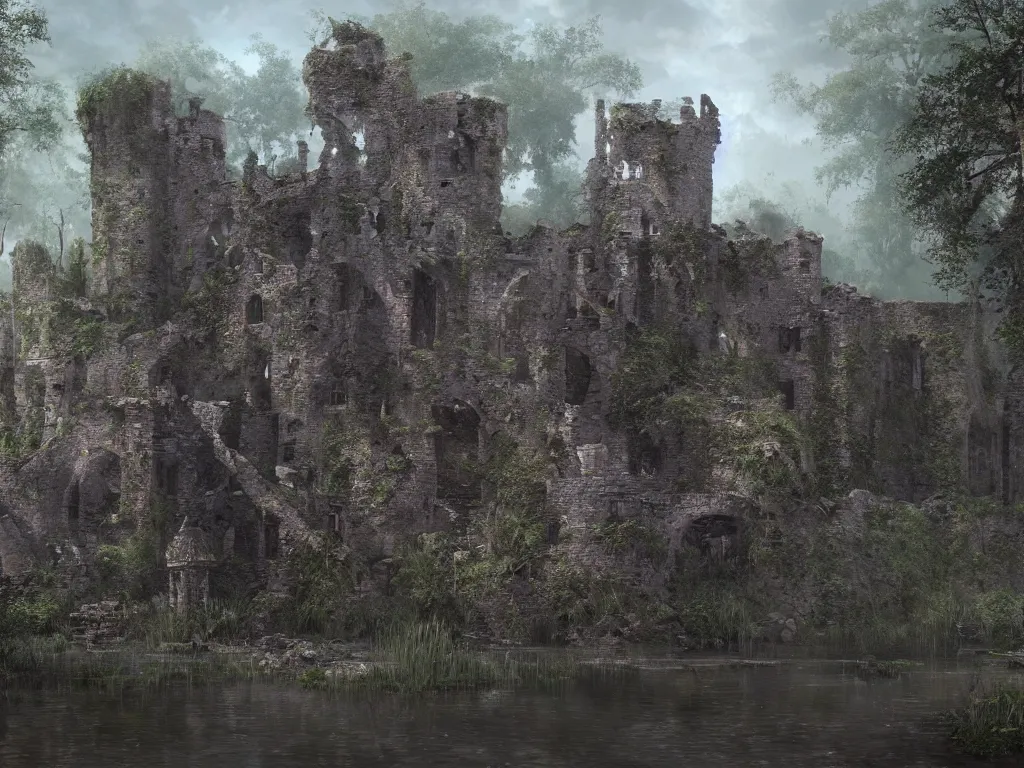
The campaign takes place in Barbarica, a rugged region of mountains and dense forests lying north of the Borderlands. Its valleys contain forgotten ruins, its wilderness shelters things that have not seen human civilisation for centuries, and its ancient strongholds bear witness to wars whose causes have long since been forgotten.

Barbarica is not an empty wilderness waiting to be settled. It is a land of competing ambitions, old grievances, and powers that have no intention of surrendering their claims.

Four factions are struggling to determine its future.

The Kingdom of Ogre has established small settlements beyond the Borderlands. Its settlers hope to extend the kingdom into these newly accessible territories, bringing security, law, and civilisation with them. Yet even among the settlers, there is no single vision for the future. Community councils and military commanders frequently disagree over how the frontier should be governed, how quickly it should expand, and what price is acceptable for progress.

The Crusaders are an ancient military order devoted to the destruction of Chaos. They worship the Unconquered Sun, the monotheistic creator of the Realm and the supreme force of Law. The First Crusade took place a thousand years ago, and its ruined keeps still stand throughout Barbarica. The Crusaders have returned to reclaim the relics, treasures, and sacred places lost during that distant war. Their cause is clear, but the consequences of their methods are not always so simple.

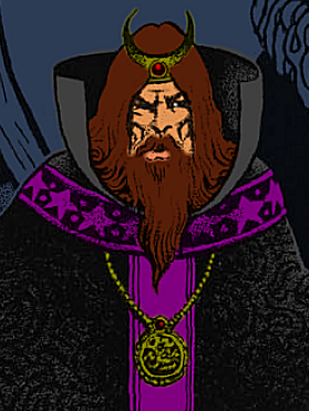
The Khanate is led by the Great Khan, a former knight of Ogre who rebelled against his king and was driven into exile in the Frontier. He has since gathered enough strength to rival Ogre's settlers. Now he seeks to establish a kingdom of his own in Barbarica, independent of the authority that once cast him out. To his followers, he may be a liberator and a founder. To Ogre, he is a traitor whose ambitions threaten the kingdom's interests.

The Black Eagles came from the west, from the harsh and forbidding territory known as the Dark Marsh. They have already established a domain of their own and freed themselves from Ogre's control. Their independence, however, has not satisfied their ambitions. They now look east towards Barbarica, intending to conquer it and bring its lands under their rule.

Each faction has its own reasons for claiming the frontier. Each believes its ambitions are justified. And none can be certain what will happen if the struggle for Barbarica becomes a war fought on all fronts.

The Shadow of Chaos

The greatest danger in Barbarica may not be any of its rival powers.

In the Realm, Chaos is more than disorder or wickedness. It is a supernatural force opposed to Law, capable of corrupting the natural world and transforming living things into something other than what they were. Men may become monsters, trees may awaken as treants, and butterflies may become trickster fairies. Such transformations do not always produce creatures that are evil, but they create things that no longer belong entirely to the ordered world.

Many are dangerous. Some are malicious. Others are simply alien to the laws by which civilisation understands existence.

For a thousand years, the barriers surrounding Ogre have helped contain this threat. Now those barriers are weakening, and Barbarica stands where the old protections are beginning to fail.

The ruins scattered across the region may hold the answers to what happened during the First Crusade. They may also conceal the means by which the Realm can be protected—or the means by which its destruction might be hastened.

The Caves of Chaos

The immediate crisis began in the Borderlands, at a temple hidden within the Caves of Chaos.

An earlier band of adventurers was sent to stop an evil cleric who had stolen a powerful artefact from the temple. They failed. The cleric escaped, and with the artefact's power he raised an army of undead soldiers buried beneath the temple.

The consequences reach far beyond the dead now marching under the cleric's command.

The artefact was the source of the corruption that had spread through the Holy Forest surrounding the caves. Its influence, combined with the weakening barriers, threatens to open the way for a much greater disaster. If Chaos gathers sufficient strength, Ogre may find itself facing a horde capable of overwhelming the kingdom that has protected humanity for a millennium.

The cleric must be found. The artefact must be recovered. And the threat must be ended before it grows beyond anyone's ability to contain it.

Yet destroying such an object is not as simple as breaking it with a sword or casting it into a fire. Its evil must first be contained, carried safely, and delivered to a place where it can be destroyed permanently.

That is where the next chapter begins.

One Knight Beyond the Borderlands

The protagonist of this campaign is Berholt, a knight of Ogre.

Berholt is not simply a warrior. His knighthood is a matter of rank and responsibility, and his talents extend well beyond the battlefield. He is a skilled swordsman, but he also possesses an innate gift for magic that he has developed through years of practice. He can think strategically, lead others when necessary, and approach danger with a measured mind rather than rushing blindly towards it.

He is also a personal friend of the King of Ogre. Their bond is closer to that of brothers than a king and his knight, giving Berholt's duties a weight that goes beyond the obligations of service.

The king has entrusted him with a mission of extraordinary importance: pursue the escaped cleric, recover the stolen artefact, contain its corrupting influence, and bring it to the place where it can be destroyed. The cleric must also be brought to justice.

But Berholt cannot undertake this mission openly under his true rank. If the cleric learns that a knight so close to the king has been sent after him, he may become more cautious, disappear into the wilderness, or use the artefact's power to prepare an even greater defence. Berholt must therefore conceal his status and travel through Barbarica without drawing attention to the authority behind his mission.

He enters a land where loyalties are uncertain, the ruins of an ancient war lie scattered across the wilderness, and every faction has its own interpretation of what order and justice should mean.

His sword and magic may help him survive. His judgement may prove more valuable still.

A World to Discover

Beyond the Borderlands is a solo campaign played using Advanced Fighting Fantasy, built around exploration, dangerous encounters, factional ambitions, and the discovery of a world whose secrets are not all known in advance.

The campaign begins with a clear objective: find the cleric and deal with the stolen artefact. But the road to that objective leads through a frontier that is itself changing. Settlements must survive. Factions compete for territory. Ancient places invite exploration, while the influence of Chaos makes even familiar parts of the natural world uncertain.

The campaign will not begin with every mystery explained or every conflict resolved. Barbarica will be discovered through travel, encounters, rumours, investigations, and the consequences of Berholt's decisions. Some dangers may be overcome by force, others by diplomacy or cunning. Some apparent enemies may prove more complicated than they first appear, while seemingly trustworthy allies may have ambitions of their own.

The larger question is whether the forces struggling to claim Barbarica will recognise the danger gathering around them before it is too late.

Ogre may have endured for a thousand years, but history offers no guarantee that it will endure another thousand.

Beyond the Borderlands, the old protections are failing, the ambitions of men are growing, and something ancient is stirring.

Berholt's mission is to stop one cleric. What he discovers may determine the fate of an entire kingdom.

Friday, April 18, 2025

Character Builds

 Character Builds


Character Creation


    At the heart of every character are four core stats: Strength, Intelligence, Willpower, and Charisma. Players begin with 100 points to divide among them, with a hard cap of 50 on any one stat at character creation. These attributes are more than just numbers — they are anchors for roleplay, mechanics, and progression.

    Strength governs physical might and melee damage. Intelligence handles problem-solving, knowledge, and perhaps mystical insight. Willpower measures focus, resilience, and the ability to resist manipulation. Charisma shapes leadership, persuasion, and morale.

    Every character begins with four skills of their choosing. These are fully custom — if a player wants to specialize in Demonology, Blacksmithing, Cartography, or Street Fighting, they can. Each skill begins at 30, with two skills receiving an additional +10.

    This system favors creativity and immersion. Players are encouraged to name skills based on how they see the world and their character’s journey through it. That open-ended freedom is intentional — it invites emergent storytelling from the very first session.

    Characters start with just 2 hit points. This is not a game of spongey health bars and endless swings. Every hit has weight. Every decision in combat matters. Players can grow stronger over time, but only through experience — literally.

If a player rolls a 1–4 on a D100 skill check, they not only succeed critically — they gain 1d10 points to the corresponding stat. This means characters get better by doing, not grinding meaningless XP. After battles, they’ll earn experience that can also be spent to raise stats or skills, depending on the outcome of their journey.

Powers are not handed out freely. These are supernatural gifts, often world-specific, and should feel earned. Whether it’s Infravision, Mind-Speech, or control over elements, powers are meant to be a rare spice in a world where steel, will, and wit are the default tools of survival.

They may come from bloodlines, spiritual awakenings, mysterious encounters, or as gifts from ancient forces. They’re meant to add flavor and uniqueness — not become a crutch.

Tuesday, April 15, 2025


Wargame Meets RPG: A New Hybrid Ruleset

In the world of tabletop gaming, players are often expected to choose between the large-scale strategy of wargames and the immersive storytelling of roleplaying games. But what if you didn’t have to choose? This experimental Wargame-RPG Hybrid offers a path for those who crave both—the thrill of commanding units on a battlefield and the nuance of developing personal stories through character-driven decisions. Whether you're leading squads across a war-torn valley or guiding a lone hero through a symbolic journey, this system is designed to bridge the gap between the tactical and the narrative.

The foundation of the system is intuitive. Each unit on the field represents forty individuals, divided into four miniatures, with each miniature standing in for ten soldiers. Units are divided into two main categories: Light and Heavy. Light units are quick, moving six inches per turn, while Heavy units move at a slower pace of four inches. Repositioning or changing formation uses half a unit’s movement allowance, encouraging players to plan and coordinate their tactics carefully.

Each unit has a simple but effective stat block: Attack, Defense, Hits, and Morale. During combat, the number of dice rolled for Attack and Defense determines the outcome—attackers roll a number of d10s equal to their Attack value, and defenders roll d10s equal to their Defense. Each unblocked attack results in one hit. If a figure takes a number of hits equal to its Hit Points (typically one), it is removed from the board. Morale adds an emotional layer to combat: when a unit loses over half its figures, it must pass a Morale Test or retreat toward the edge of the battlefield. If it leaves the board, the unit is considered routed and out of the fight.

Gameplay flows through a three-phase turn structure: movement, ranged combat, and melee engagement. This streamlined order of operations allows for fluid decision-making without sacrificing tactical depth. Units with ranged weapons may strike targets within six inches and line of sight, while melee combat takes place once units are engaged in close quarters.

The heart of the RPG integration lies in the Hero Units. These are single-character figures with 2–3 hit points, capable of influencing the battlefield in powerful ways. Any friendly units within four inches of a Hero receive a +1 bonus to all stats, making them natural leaders and focal points. However, the risk is just as significant. If a Hero falls, all allied units within their influence must immediately take a Morale Test or retreat. Outside of combat, Hero Units are defined by character stats ranging from 1 to 100—Strength, Intelligence, Will, and Charisma—used in narrative scenarios, campaign decisions, or special challenges.

My favorite roleplaying experiences came from two video games: Mount & Blade: Warband and The Elder Scrolls V: Skyrim. Those games shaped how I believe a tabletop campaign should feel—fluid, seamless, and deeply immersive. When I began playing traditional systems like Dungeons & Dragons, I quickly realized they didn’t deliver the kind of integration I was looking for. I wanted a game that allowed for both large-scale conflict and personal storytelling, one that could be played solo, and one that didn’t require a dedicated game master to function. I had these ideas in my head for years, but it wasn’t until I began working with AI assistance that I found the time and clarity to finally codify them into something playable.

One of the most unique elements of this system is that it requires no dungeon master or referee. Instead, all players at the table participate equally in managing the world and keeping track of the game’s events. This democratic structure allows for shared storytelling, more seamless worldbuilding, and a stronger feeling of collective agency. It also opens the door for immersive solo campaigns, where the player can operate both strategically and narratively without needing to improvise rules or content.

Another design priority was to make the relationship between the wargame and the roleplaying aspects feel organic. I didn’t want to create two separate systems glued together. I wanted them to feel like two lenses on the same reality. What happens in battle influences the characters’ stories; what happens in narrative scenes affects battlefield morale, power, or presence. I also wanted the system to be intuitive—rules built off common sense and natural logic, not endless tables or memorization.

Above all, I believe the most innovative aspect of this project is the seamless transition between the wargame and the RPG modes. There is no hard line where one ends and the other begins. You could be deep in a skirmish one moment, and then focus in on a single Hero making a story-defining decision. These transitions don’t feel like switching games—they feel like shifting perspectives within a single, cohesive experience.

As of now, the ruleset is fully playable in its current form, but it is also designed to be modular and expandable. Planned future features include a ritual-based magic system, weather and terrain effects, fatigue mechanics, Hero leveling, and fully integrated campaign rules. Each addition will be created with care to preserve the fluid and intuitive feeling of the game’s core structure.

This blog post—and the game system itself—was written and developed with the assistance of artificial intelligence. The AI has acted not as a replacement for creativity, but as a collaborative design partner: helping structure, clarify, and synthesize years of ideas into something tangible. The process has allowed me to accelerate the translation of vision into form, and I hope the results speak for themselves.

This hybrid system is an invitation: to tell stories and make tactical decisions in the same breath, to explore character and consequence from multiple scales, and to collaborate in building a world that grows from your choices. Whether you’re a solo tactician or a group of storytellers looking for a new way to play, I believe this system has something unique to offer.

Monday, April 22, 2024

Dwarves! Goblins! Bandits! Advanced Campaigning in the King's Field

 The West King's Field


    Over the week I've played several sessions of my fantasy campaign. Due to the events of the RPG and wargames I've ran there are now many different moving pieces in my game world. I'm going to give an update in what's going on in the West King's Field in this posting. Thank you for reading! 

Schwarzstein Keep [6/12/100 - 6/18/100]

    While the party of RPG characters I run out of the village of Backwood to the south are on down time I decided to create another part of characters based out of the keep named Schwarzstein to the north of the Hessar. I used the module B2: Keep on the Borderlands, written by the legendary Gary Gygax as a base for this location. It's a module I'm fairly familiar with so integrating it into my campaign world was easy. I decided to model this party as a guild of adventurers named the Schwarzstein Hounds. I started to feel that the scope of the campaign was starting to exceed what is offered in White Box S&W so I chose to convert my campaign to Advanced Dungeons and Dragons [with the use of the Old School Rules Reference and Compendium edited by Matt Finch]. As per the guidelines given in the Dungeon Master's Guide, I took notations on this guild concerning the employees, the adventurers affiliated, upkeep costs, and a yearly tax owed on the guild hall they operate from. 
    The patron/guild master of the Hounds is a retired 9th level fighter named Siegbert. He hires would-be adventurers under a contract providing lodging, training, and jobs in exchange of 50% of treasure earned on said adventures. Other than the patron the guild hall is ran by two clerks, a scribe, and two guards. I rolled up three characters (fighter, cleric, and thief) to start out with. 
    Their contract was to deal with a group of raiders who had been terrorizing merchants on the road to the keep. I used Scarlet Heroes to run through an urban adventure about investigating the whereabouts of the raiders. It turns out that some of the raiders were turncoat guards who were plotting a prison breakout. My characters uncovered the plot and were able to find out where the raiders' camp was located and with reinforcements from the castellan's men, they assaulted the camp and took raiders prisoner. The guild got a share of the treasure recovered as payment and got in good favor with the castellan. 


The Moat House Raid [7/31/100]

    At the raiders' camp the Swazian soldiers discovered a map which pointed to an abandoned moat house in the nearby swamp as a base of operations for the bandits. Due to their excellent performance in the last adventure, the Hounds were hired to investigate this. With an addition four men-at-arms they stormed the gate and was attacked by a giant frog monster. The thief Ludwig von Mausborg slew the monster and they rushed past the moat house's broken gate to catch the fleeing bandits by surprise. Sigusmund the fighter led the charge against the bandits but was taken out by a bullet fired by one of the bandit's flintlock pistols. The bandits who chose to fend off the party then took our Khurasan the cleric and the remaining men-at-arms, leaving Ludwig to fight off the bandits who had not barricaded themselves in the next chamber. 
    Curiously, one of the bandits was betrayed by his brothers-in-arms. They barricaded the bandit out of the chamber- effectively leaving him for dead while the rest gathered their treasure and escaped on boats. Ludwig was able to make a sneak attack on this bandit and knocked him out for further questioning. 
    The raid was a loss for the party. The bandits were able to flee by boat up stream before Ludwig could bust into the next chamber. Ludwig took the bandit to the keep for questioning. The bandit had no issue giving out the information he had. In return, the castellan showed mercy, and allowed him to join the Hounds as a mercenary. Thus, Alexander the fighter joined the campaign. 

Malborg Castle [8/5/100]

    I got heavily invested with learning the Chainmail Medieval Miniatures rules and played several battles concerning the [human] army from the kingdom of Ogre, who had been stationed to protect Backwood village against whatever chaotic force was springing out of Malborg's dungeon. By playing out 3-5 unchronicled battles with just the vanilla rules [even though fantasy figures were used], I feel like now I have a really good grasp of that rules system and how it can be incorporated to fit hand-in-hand with my RPG system which is not an easy thing to balance out. Part of the reason I switched to AD&D is because AD&D allows you to do just that- scale your RPG stuff to wargaming stuff with little work or conversion [just a change of mindset really]. 
    Eventually the wizard of Backwood had enough of the sorcerer's army and sent my party back to Malborg to vanquish the sorcerer. So, they did just that. They marched throughout the first floor of the dungeon until they reached the lair of Malbus the Terrible. Malbus was a 4th level magic-user who was backed up by several goblin henchmen who held the party back at the door to his lair as he enganged in a duel with our magic-user Paladis. Geoffry the knight fought through the goblin resistance which gave Marbin the cleric the opportunity to breach into the lair and melee Malbus right before he could pop off an invisibility spell and escape. They then took the sorcerer's treasure and began their exfil from the dungeon. They were attacked by a group of dark elves who had waited in the shadows for the adventurers to walk out with the treasure. Paladis would be assassinated by a dark elf's crossbow bolt before the other party members could avenge him. With their hit points low they decided to grab Paladis's map of the dungeon and bolt out dungeon before they ran into any more trouble. 
    The treasure and exp gained from the adventure bumped the two characters up to around level 5 which is a great thing, but time needs to pass in order for them to be playable agian as per AD&D doctrine. So, with the money they got from the raid they bought a plot of land and are now overseeing the construction of a homestead within Backwood's territory, which will set the characters back until 4/7/101.  

The Dwarf Fortress of Hrardven

    It was at this point that I decided to design another dungeon that my Hounds could delve into. There's mountains 3 miles north of the keep so I decided to created a long-abandoned dwarf fortress [or so the humans thought] with treasure to uncover inside. Instead, the fortress was a battleground between the resident Blue-Teeth goblin tribe and the dwarves who sought to reclaim their long lost home. Similarly to how I came up with the record for the Hounds, I created a record for the goblins and dwarves. To start, the goblins were 236 in number who were led by their chief named Sharp-booger. Sharp-booger has 7 worgs he keeps as pets and five goblin guards [who fight as gnolls]. They settled into Hrardven in the year 20 and have lived there ever since. Besides a giant cave lizard that Sharp-booger had to slay in the year 66, they realtively thrived here. That was until the rightful dwarven heir Thaim Lord-dwarf [fighter 6] and his retainers consisting of his brother Gatsu Prince-dwarf [fighter 4], Marvn Loud-dwarf [fighter 5], Orin Ruby-dwarf [fighter 5], Thatelch Beer-dwarf [fighter 3], and Urkal Sad-dwarf [fighter 5] came to the dungeon in the year 40 along with a warband of 163 dwarf warriors. Ever since the two factions have been warring in the mountains for control. 
    8/14/100 would mark the day of the Battle of Skinny Bridge. The battle got its name because of its location, a rickety-slim bridge which connected the two halves of the dungeon together. Sharp-booger led his bodyguards, 18 goblins, and 3 worgs over the bridge in an attempt to capture a few chambers of the other side. Thaim Lord-dwarf would take 9 of his warriors to defend the bridge. This is the commotion the Hounds heard as they entered the dungeon that day. They chose to west instead of east where the battle was happening and ran into a dwarf guard. The guard mistook them for mercenaries Thaim had hired and the party decided to play along. The dwarf led them down a secret corridor and to the office of Urkal Sad-dwarf, who offered them a gemmed silver amulet [worth 2,400gp] and a silver-gold braclet [worth 900gp] as a reward for helping push back the goblins. The Hounds were low on money so they did not hesitate to accept the offer and joined Urkal to reinforce his king. 
    A few dwarves and goblins would die in the battle, but what was more key is that Ludwig got a backstab off on Sharp-booger and assassinated him. This caused the goblins to break morale and flee back to their side of the dungeon. Thaim took the commandeered the bridge and took it back to his side, ensuring that goblins could not easily cross the threshold. 
    

    A large feast was held at the dwarven mead hall to celebrate the victory of the Skinny Bridge and the death of the goblin chief. Impressed with their performance at war, and at Alexander's ability to beat him a mead chugging competition. Thaim opened an account with the Scharzstein Hounds, and sent Banain Thoughtful-dwarf [ a 1st level dwarf cleric with 18 wisdom] as his representative to the guild. And thus, I gained a new party member. 

A Rising Threat

    One last major event would be chronicled on 8/11/100. With the evil sorcerer vanquished, room for a greater evil was made to flourish. Within the deeper depths of Malborg Castle rested a demon lord named Baalroch. With the seal of Malborg broken, Baalroch unelashed an army of orcs from the dungeon and throughou the surrounding Black Forest. Feeling bold, he launched an attack on the fields of Backwood where his orcs faced the soldiers from Ogre, and nearly destroyed them before being pushed back into the Black Forest. Baalroch is satisfied with controlling the Black Forest for now but time will tell when his next assault will be. 

Tuesday, April 16, 2024

Chaos Reigns in the King's Field!

 War in the King's Field?


    Chaos has begun to reign throughout my campaign setting. For the first time in a while the peace in the Western King's Field has been broken as a consequence of certain events which transpired in my last few game sessions. The events which brought about this will be described in this campaign report: 

The wyvern is dead! Malborg's seal is broken! 

    Ser Geoffry the fighter acquired some new allies on his journey. One of them being a new party member- a cleric named Marbin. Together they assembled a small force of crossbowmen to claim the bounty on the wyvern of Malborg. They mounted a successful sneak attack on the beast while it rest atop a ruined tower. By scaling the walls and jumping on its back, Geoffry was able to slay the monster as Marbin led the crossbows to hit their targets true. They brought the severed head of the wyvern to the tavern in Backwood for all to see.
 
News of the wyvern's defeat travelled to the taverns and guild halls located within the King's Field. The rumor piqued the interest of none-other than the inheritor of the long-forgotten keep- Paladis Malborg, a novice wizard. He came to the village of Backwood to meet with those who had slain the wyvern and presented them a map of the dungeon beneath Malborg Castle [the first floor of it]. Record of what is inside the dungeon and how far deep it goes was lost to time over a century ago, but if they were to band forces then they could uncover the mystery of the castle and recover its lost treasures. The adventure would be risky for the fledling adventurers but the potential gold and glory with achieving such a task would plant their names into history eternally. The fighter, magic-user, and cleric formed the Malborg Marauders, a league of adventurers with the prime goal of spelunking beneath the ruins. 

Swazian Incursion

    Patrols hurriedly stormed on horseback to the office of the worshipful mage of Backwood with a frightening report. An army from the kingdom of Swazia was spotted marching north of the Hessar river. Although the mage was granted autonomy of the West King's Field, the accords agreed upon still placed the region under the protection of the king of Ogre. Thus, the mage of Backwood took command of the Ogth soldiers stationed in the region and met the Swazaians at the crossing of the Hessar, where after a short round of futile parlay a battle would take place. 

Missile file would mostly be exchanged by the two sides from across the river while calvalry counter attacks would be contested on either side of the Hessar. Although Swazian infantry would make an attempt to cross the river, they would be taken out by Ogth archers. With the core of their forces defeated, the Swazaians retreated back north to gather their strength while the mage of Backwood took the opportunity to reinforce his position south of the Hessar and prepare for another offensive. The Swazians had not yet made their intentions clear, but all now know that war has come to the King's Field. 

Monsters of Malborg

The Marauders were on their way to Malborg when they had been ambushed by the walking dead! Suddenly, several bodies had risen from the ground. They were the bodies on long dead soldiers of Malborg Castle. Marbin used his cleric abilities to keep the zombies at bay- but a clear observation had been made. With the wyvern no longer holding back the horrors beneath the castle ruins, chaos was allowed to leak onto the surface and cause havoc across the King's Field. 


The Sorcerer's Apprentice, a Deep Sleep

The Marauders traversed the first level of Malborg Castle. Fortunately, they found most of the ruins beneath to be empty with a few scraps of treasure left behind. What caught them off-guard however was the emergence of a level 2 magic-user. The sorcerer was accompanied by six goblin body guards. He claimed to be an apprentice of the sorcerer who lives beneath the castle and that he had just awoke from a deep sleep. He then gave no further details. After deducing that the adventurers were here to steal the lost treasure, the apprentice beckoned his goblin minions to attack. The sorcerer used a charm spell to place the cleric under his command and had him attack Paladis while the fighter was distracted with the goblins. Paladis was able to get the better hand over the sorcerer this time, which forced him to flee deeper into the castle, leaving his goblins for dead. The charm spell had lifted from the cleric, and he regained his senses. The party was left weak after the attack and they began their extract from the dungeon. They ran into a group of elves who attacked them, which forced them to flee even faster. Thankfully, the dice allowed them to escape with their lives and treasure this time...


Wednesday, April 10, 2024

West King's Field Campaign Report #3


World Building and Dungeon Delving

    What you're looking at is a draft of the campaign map I made last night. I tried not to go super detailed but I wanted to give myself enough of an idea of the area so I can begin planning war games primarily. A week ago I made up a wargame army using the Chainmail Medieval Miniatures rules but I've yet to design a scenario for them. Nevertheless I have an idea of the world I'm playing in now. 

    I decided to play something fairly lite and fun today. I broke out my dungeon tiles and used those to quickly generate a dungeon for my fighter to explore in. Note that the dungeon generated is not the main dungeon of Malborg Castle as that is still under threat by the Wyvern. Instead of going after the Wyvern initially as I did with my last character, I want this character to level up at least one level and find a few ally NPCs along the way before trying to storm the castle. 


Encounter #1- The Dwarf Fighter

The first being my fighter encountered was a dwarf fighter walking my direction from a long corridor. On the reaction table I rolled a positive reaction so I knew that the dwarf would not attack me. He warned me of a giant spider who is waiting for its next meal down the hallway and that going down that way would be suicide. He was a treasure hunter like me. He tried to take this route further into the dungeon but towards the north he encountered a few unfriendly skeletons which would have been a challenge by his lonesome. Now that he had found me, he wanted to join together to clear the way of the undead so that we both could venture past the giant spider. To this, I agreed. Although he had good armor on, he didn't have many hit points (that being a roll of 2hp). With an agreement to split the treasure gained 50/50 we pressed to the north to face the undead. 


Encounter #2- The Undead


The bodies of long-ago slain warriors littered the chamber to the north. As the dwarf and I entered we saw the bones begin to swirl around violently until they began to join together to form three skeletal warriors who armed themselves with battered, rusty weapons. This encounter looked scary but with some strategy it wasn't so much to handle. We pulled back to the narrow hallway so that we couldn't be easily overwhelmed by the skeletons who outnumbered us by one man. Having lined them up we hacked and slashed at them until they all crumbled into dust. I took a pretty bad would which brought me down to 2hp. Thankfully, my dwarf friend had some healing supplies on him and was able to restore most of my lost wounds.


Encounter #3- Ghouls

This encounter was really scary to come across. I've always struggled against ghouls in these OSR games because they are extremely powerful against low level characters. In some systems, ghouls can straight up murder your character with one failed saving throw. In White Box, however, they can paralyze you for 3d6 rounds if you fail a saving throw against them. It also doesn't help that they are 2HD monsters so they can be quite meaty. There were three ghouls to slay. Thankfully, I rolled low on their hit points so we were able to take care of them and I passed the saving throws needed to ensure that my character would not fall to paralysis. I could see why it would be so dangerous for a solo adventurer to traverse this dungeon. It was wise to team up with that dwarf. I don't know if I would have survived without that magic armor I won in the jousting tournament. 


Encounter #4- Dark Elves


Once again, another TPK waiting to happen. The two dark elves can surprise their enemies on a 1-4 result of a d6 roll. Their swords and crossbows are also coated with poison which could surely kill a level 1 character in just one hit. However, these elves had bigger fish to fry. I rolled a positive reaction on the reaction and worked out that they had come to this dungeon to slay an abomination to their race- a drider who had taken up a lair here. They hired the dwarf and I as extra muscle for their assault on the monster and promised us the drider's treasure. It was either be their meat shields or die by their hand right then and there, so the dwarf and I agreed to join them. 


Encounter #5- Drider

    We walked south down a hallway and reached a door that led to the drider's lair. The dark elves came up with a plan to sneak through the shadows into the lair and rain paralysis arrows on the drider- immobilizing it so that the dwarf and I could rush in with melee weapons and drain its 24 hit points with free attacks. The plan kind of worked. With the drider paralyzed the dwarf and I rushed in and chipped away a lot of hit points from it in the surprise round and the round that followed. However, the drider's paralysis faded and with one attack it killed my dwarf ally (I wanted to make him into a player character but that was the fate of the dice). The dwarf would be the only casualty of this fight, and my character would walk away with 30 gold coins paid to him and a bunch of exp for slaying a high-level monster. I thought maybe there could be much treasure and exp earned by working with these dark elves and I offered my services further. However they wished to part ways with my character after the battle. Therefore my character Geoffry returned home to the village of Backwood to rest and meditate on his most recent adventure. 


NEW CAMPAIGN: Beyond the Borderlands

  Beyond the Borderlands An Advanced Fighting Fantasy solo campaign For a thousand years, the Kingdom of Ogre has stood as humanity’s last g...